Merry Christmas, Happy Hanukkah and Happy New Year to You and Yours!
Friday, December 23, 2016
Tuesday, December 20, 2016
There's Still Time!
If you're in the last minute or don't know what perfect gift to give the gardener in your life camp, fret no more. May I suggest the gift of education.
Denver and the Front Range is very fortunate in having many free or low cost outlets for garden classes and seminars. Below is a list with links that I've put together for ones that I know of as of right now - I'll refresh the list (and re-post) the first of the New Year. Don't forget botanic garden memberships or plant societies, consider giving them a year's membership to meet other gardeners. Obviously if you don't reside in this area, check out what's offered in your neck of the woods.
SEMINARS, CONFERENCES, WORKSHOPS:
Jefferson County Beginning Vegetable Gardening Symposium - January 28, 2017
Landscaping with Colorado Native Plants Conference February 11, 2017
High Plains Landscape Workshop March 4, 2017
Denver Rose Society Educational SymROSEium April 1, 2017
PUBLIC GARDEN INSTITUTIONS AND BOTANIC GARDENS:
Butterfly Pavilion Westminster
Denver Botanic Gardens
The Gardens on Spring Creek Ft. Collins
The Hudson Gardens Littleton
Pikes Peak Urban Gardens Colorado Springs
AREA GARDEN CENTERS: too numerous to mention, so call around or check their websites or Facebook for their 2017 classes.
GARDEN SOCIETIES AND GARDEN RELATED GROUPS:
Colorado Cactus and Succulent Society
Colorado Native Plant Society
Colorado Water Garden Society
Denver Field Ornithologists
Denver Orchid Society
Denver Rose Society
Front Range Organic Gardeners
Ikebana Denver Chapter
Rocky Mountain African Violet Council
Rocky Mountain Chapter of the North American Rock Garden Society
Rocky Mountain Koi Club
Rocky Mountain Unit of The Herb Society of America
SEMINARS, CONFERENCES, WORKSHOPS: Jefferson County Beginning Vegetable Gardening Symposium - January 28, 2017
Landscaping with Colorado Native Plants Conference February 11, 2017
High Plains Landscape Workshop March 4, 2017
Denver Rose Society Educational SymROSEium April 1, 2017
PUBLIC GARDEN INSTITUTIONS AND BOTANIC GARDENS:
Butterfly Pavilion Westminster
Denver Botanic Gardens
The Gardens on Spring Creek Ft. Collins
The Hudson Gardens Littleton
Pikes Peak Urban Gardens Colorado Springs
AREA GARDEN CENTERS: too numerous to mention, so call around or check their websites or Facebook for their 2017 classes.
GARDEN SOCIETIES AND GARDEN RELATED GROUPS:
Colorado Cactus and Succulent Society
Colorado Native Plant Society
Colorado Water Garden Society
Denver Field Ornithologists
Denver Orchid Society
Denver Rose Society
Front Range Organic Gardeners
Ikebana Denver Chapter
Rocky Mountain African Violet Council
Rocky Mountain Chapter of the North American Rock Garden Society
Rocky Mountain Koi Club
Rocky Mountain Unit of The Herb Society of America
Sunday, December 11, 2016
Farewell Gardening Season 2016
Last year my end of the year garden blog dealt with two areas - weather and insects. In 2015 we had too much rain and too many Japanese beetles. In 2016 we had less of the former and more of the latter. Let's visit some of the vegetable tales first, then a few comments about the landscape. I'm Japanese beetled out (for now), but you can read all about them starting here - Japanese beetles.
Without even looking up the exact rain totals for 2016, we were dry most of the summer and all through the fall. The living proof in my garden was the potato crop. In '14 and '15 they were more than content growing in the cool, moist temperatures, the yields were outstanding, the taste beyond any super market spud. This year I had to move them out of the baking hot raised bed garden area to the coolest part of the landscape with afternoon shade. I grew them in Smart Pots so moving them was the easy part, keeping them watered almost every day got tiresome and I could tell by looking at them that they just weren't liking the unrelenting heat. You'd think the tomatoes would be just the opposite and love the hot days, nope, not them either.
Some years tomatoes are more fussy than a three month old during the dinner hour. Instead of crying, a tomato will quickly show you what's bothering it. Temperatures over ninety degrees, especially for several days on end reduce flowers from forming and if they do flower, many of them simply dry up and drop off the vine. Fuss, fuss, and more fuss, I had lots of dropped tomato blossoms last summer. Denver was mostly in the nineties from June 9th into September, so their fuss quotient was over and beyond.
Throw in just one night of cool temperatures (less than fifty-five) and tomatoes sulk, often taking several days to resume proper growth, this happened more than once in mid-late August. On the 19th it went down to 51 for a couple of nights, then as low as 49 on August 25th. And no, I didn't pull out the cover cloths for protection (should have). It pretty much stayed in the mid-fifties at night from late August through September with a few warmer nights here and there. As days got shorter in to the fall, the harvest, which should have been robust was just so-so. Now this was my garden in central Denver and I realize there are always exceptions or gardeners who say they had a great tomato season. They are the ones right now enjoying their home canned stewed tomatoes or sauce. Not me, I'm back to store bought 😪.
Tomatoes appreciate fertilizer during their fruiting period, but too much will lead to more foliage growth and less fruiting, too little fertilizer is an invitation for early blight. This year I didn't have early blight, but I did have tomato spotted wilt virus which is very difficult to prevent, plus there's no cure once the plant is infected. Pulling and not composting the diseased plant is the only option.
A thrip insect carries and spreads the fungal disease when they take up residence in your tomato's leaf tissue. These guys (thrips) can be found on many different weeds in the garden and move to tomatoes or other night shade vegetables. They can also hitch hike home from garden center plants. Read all about their life cycle from this CSU Fact Sheet. The plant symptoms of TSWV look much like other fungal or nutrient problems, including bronzed or spotted leaves, tip die back and a general lack of vigor, the fruits may become mottled or develop ring patterns. I lost four tomato plants to TWSV, I got a firm diagnosis from the Jefferson County Plant Diagnostic Clinic.
| Tomato Spotted Wilt Virus |
| Basil veil over Smart Pot to keep Japanese beetles off! It worked! |
The basil crop was outstanding this year, no more downy mildew issues at all, the key was growing them in Smart Pots and not directly in the ground. I was able to seed three successive crops and used the leaves in salads, sandwiches and pesto with plenty left to chop, process with oil and freeze. 🙌
I didn't plant squash this year after the garlic harvest, instead I planted a cover crop to improve the soil tilth and renew the fertility in two of the raised beds.
It was an average year for peppers and eggplant, I think the excessive heat and possible water issues (not enough) may have hurt them, but more than that I noticed that the roots really didn't reach out much in the soil. My hunch is that I just didn't score the compacted roots as well as they should have been cut. I checked out the root ball when I pulled the plants, sort of a visual root autopsy. The plants were small overall, another sign they just weren't growing well. My fault, my bad, thank goodness there's always next year!
| Final Swiss chard and lettuce harvest December 1, 2016 |
As for the ornamentals and rest of the landscape, despite a couple months of higher than average water use I have no complaints. I attribute the water use on establishing new plantings from the house build (especially the trees). In time that will even out and with the small turf area and water thrifty plantings, I look forward to much lower water bills. In earlier blogs I wrote about the new planting beds, I'll keep you posted on how they fill in over time.
| Long Lasting Fall Colors and Textures |
Winter has finally arrived in the Denver area (the mountains are getting tons of the white stuff, so come on out and ski). Snow has been spotty along the Front Range so far - we'll welcome any moisture to replenish our dry soils. Warm days in the 50s seem to sneak in here and there between the Canadian freeze events that have been seeping in to Colorado. Take advantage of the dry days above 40 degrees to water unfrozen new plantings and south facing areas of the landscape. After you drain the hoses, head inside for a warm cup of (your choice) and peruse the 2017 garden catalogs. Dog ear the pages or bookmark the company on your toolbar. Place your orders soon but save some dollars and support your local garden retailer. Better yet, stroll on in and get some seeds or other garden supplies. Breathe in the moist air and dream.....of you know what......spring. 😎
| Fall Fruit was AWESOME in 2016 |
Friday, December 2, 2016
More Greenery Please
December is the month it truly sinks in that the landscape is mostly motionless shades of brown and grey. Your view outside may seem more lively if you have conifers to draw attention away from the dormant plants. Note to self - if outdoor greenery is in short supply plant more evergreens next spring. And throw in some ornamental grasses and shrubs that add not only texture, color and movement, but some contour and good hiding places for birds to hang out...keep a close eye on those cats!
Enduring winter isn't all bad, we know we have to have cold months to get to spring, plus we can get our green fix in other ways - you just need to look around for greenery in the form of freebies or low cost DIY tree cutting or shopping around. Release your creativity side even if you don't have the natural knack, I sure don't. Here's what I do...
I look for free or low cost greenery at the Christmas tree lots that spring up immediately after Thanksgiving. They usually have a bin of excess branches that were cut to shape the tree. You will mostly find Frasier or Noble fir branches, but if you call around, you might find other types of conifers.
If you get a Colorado permit to cut your own Christmas tree in state and national forests, you get up to five permits per person ($10.00 each permit) so you'll have plenty of greens for use back at home. The permits are for trees, so use one of the permits for an extra tree that can be cut up into branches. Garden centers, grocery stores and box stores also carry bundled greens for use in all kinds of indoor and outdoor decorating - wreaths, boughs, swags and winter floral arrangements.
So you've got your greens, now what? First of all, realistically they'll only last a few weeks after Christmas unless you're diligent about spritzing with water or using anti-desiccant commercial sprays. It's Colorado after all, home of mostly year round fifteen percent humidity. Better add to your list another tube of moisturizer.
Here are some greenery tips -
Wishing you a joyous holiday season. I'll return for a few more blogs before year's end.
Enduring winter isn't all bad, we know we have to have cold months to get to spring, plus we can get our green fix in other ways - you just need to look around for greenery in the form of freebies or low cost DIY tree cutting or shopping around. Release your creativity side even if you don't have the natural knack, I sure don't. Here's what I do...
![]() |
| Internet Photo from www.bjyapu.com |
If you get a Colorado permit to cut your own Christmas tree in state and national forests, you get up to five permits per person ($10.00 each permit) so you'll have plenty of greens for use back at home. The permits are for trees, so use one of the permits for an extra tree that can be cut up into branches. Garden centers, grocery stores and box stores also carry bundled greens for use in all kinds of indoor and outdoor decorating - wreaths, boughs, swags and winter floral arrangements.
![]() |
| Internet Photo from gtrinity.com |
So you've got your greens, now what? First of all, realistically they'll only last a few weeks after Christmas unless you're diligent about spritzing with water or using anti-desiccant commercial sprays. It's Colorado after all, home of mostly year round fifteen percent humidity. Better add to your list another tube of moisturizer.
Here are some greenery tips -
- For holiday cheer deck the table setting, front door, mantle and all through the house with fresh greenery (artificial works too, pine fragrance sold separately).
- There are many evergreens to choose from, but the best scents come from Scotch pines, Balsam, Douglas and Frasier firs. Stay away from white spruce, their needles don't smell nice when crushed. The aroma from eastern red cedar can't be beat, but these Christmas trees generally aren't sold in our area.
- Before you decorate with greenery first get them well hydrated - fill a bucket with room-temperature, non-softened water to hold the greens.
- With a hand pruner make diagonal cuts through the stems, and then using a small hammer gently crush the exposed end, this will help with water uptake.
- Set the stems back in the water for a few hours before making a wreath, swag or boughs to hang, then decorate. You'll need twine or wire to attach branches, plus bows, ornaments and any other holiday adornments.
- Supplement arrangements inside or out with juniper, eucalyptus, lavender sprays, rosemary cuttings, twigs and branches, dried fruits, dried flowers and pine cones. Use artificial materials or flowers to fill in if less fresh greenery is available. The possibilities are many, just check on Pinterest or Houzz for thousands of ideas. And don't forget the lights.
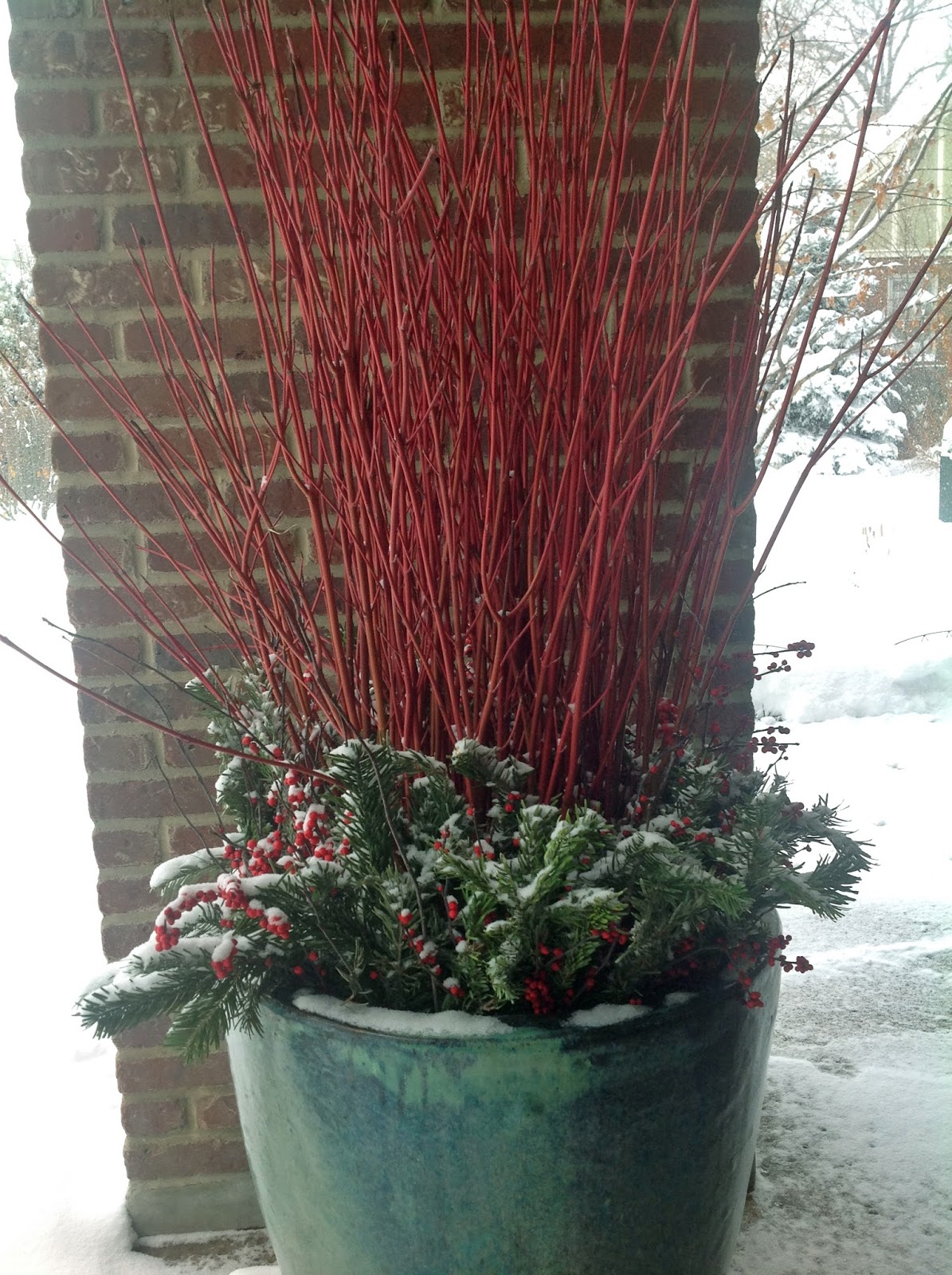
- Using greenery and other seasonal props in outside containers is a festive way to celebrate the holidays and spark up dreary empty pots. I recommend removing spent annuals and some soil well before the soil freezes so it's easier to fill and decorate. If the outdoor containers are frozen solid, then just layer in the greenery or if there's room drop in a greenery pot that was assembled indoors.
- Caution on clay or glazed outdoor containers. Eventually they may crack from the Colorado freeze thaw cycles, but if you are leaving them outside anyway and not covering them or elevating them from direct cold from the ground, then by all means give them a pop of winter decor. Plastic, concrete and metal containers should weather just fine.
| Assorted Layered Greenery Urn |
| Curly Willow, Spruce Branches and Ilex |
| Cardinal Dogwood, Spruce and Ilex |
![]() |
| Internet Photo from Pinterest |
![]() |
| Simple Outdoor Design with Birch, Greens and Pine Cones from Pinterest |
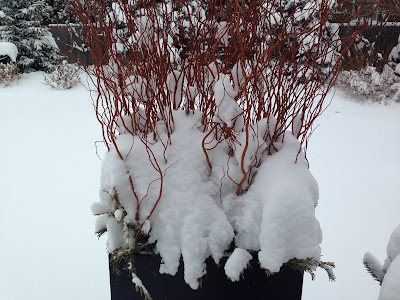
| Snow on Curly Willow and Spruce Greenery |
Wishing you a joyous holiday season. I'll return for a few more blogs before year's end.
Tuesday, November 22, 2016
Gift Giving...Make Mine a Rose Herbal Surprise
With apologies to Gertrude Stein, "a rose is a rose is an herb." Plants defined as herbs are useful for fragrance, food or flavoring. Many have properties effective as medicine or coloring materials - for a natural dye mix lavender, roses and a little mint and lemon juice to turn materials shades of pink.
Roses more than qualify as top shelf herbs, their provenance dates back to the sixteenth century Ottoman Empire where rose petals were distilled and made into rose oil*. This holiday season consider the "Queen of Flowers" for gift giving in one or more of their herbal delightful forms - most can be made right in your own kitchen.
Pamper
Rose and Lavender Bath Oil (from The Book of Herbs), Dawn Titmus)
Ingredients: one cup of almond oil, five drops of rose essential oil (use good quality when using on the skin), five drops of lavender essential oil, sprig or two of dried lavender, dried rose petals (small handful, don't use fresh petals), a decorative bottle to hold one cup or more, raffia
Directions: tie dried lavender sprigs (shorter than the bottle) with raffia and put in the bottle. Add dried rose petals. Pour half the almond oil into the bottle. Add the rose essential oil drop by drop, then the lavender essential oil. Top the bottle with the remaining almond oil, and then swirl the mixture so the fragrances blend well.
Rose Petal Bath Salts (from
POPSUGAR Sarah Lipoff) Makes two cups
Ingredients: rose essential oil, one cup dried rose petals, one cup Epsom salts, 1/3 cup baking soda, 2/3 cup powdered milk, glass sealable container.
Directions: crumble rose petals into small pieces on a plate, then drizzle with a few drops of rose essential oil. Mix together Epsom salts, baking soda and powdered milk in a bowl, breaking up any clumps. Layer the dried ingredients between the rose pieces in the container, starting with the dry ingredients. Layer to the top, the scent will be stronger the longer it mingles in the jar. Add a large scoop (~1/4 cup) to your next hot bath for instant stress relief!
Culinary
Refreshing Tea (Betty Cahill)
Ingredients: 1/2 cup loose green or black tea, 2 tablespoons rose buds
2 tablespoons cut orange peel
Directions: mix all ingredients and store in an airtight container
Brew: put one teaspoon loose tea in an infuser or tea ball, pour boiling water in cup and steep for a few minutes. Sweeten to taste, sip and enjoy.
Rose Petal Vinegar (Barbara Milo Orbach)
Ingredients: one cup fresh or dried rose petals, 4 cups vinegar (champagne or apple cider vinegar), clean empty wine bottles, clean corks or if using a metal lid over a jar, cover the bottle with plastic wrap first because vinegar will eat away metal if in direct contact.
Directions: rinse and gently dry fresh rose petals (no need for dried). Pour vinegar into a sauce pan and heat to boiling point. Remove from heat immediately. Place rose petals in a mixing bowl and pour hot vinegar over them, cool. Pour the mixture into the wine bottles, cork and let sit for 3-6 weeks. Shake. Strain out the petals and refill bottles.
Scented Rose Honey (Kathleen Gips)
Ingredients: 1/2 cup dried or fresh, fragrant, pesticide-free rose petals (homegrown is best, do not use florist grown).
Directions: rinse and gently dry rose petals. Use scissors to cut off the white base of each petal (the bitter part). Chop the rose petals into small pieces on a cutting board. Pour the honey into a saucepan and heat over low for a minute or two. Remove the honey from heat and stir in the rose petals. Let cool. Pour into a glass jar, yield one pint.
A quick internet search will help you find scores of other recipes including rose hip sauce, rose petal ice-cubes (great for summer entertaining), rose syrup - try over crepes or pound cake. Also look for easy rose herbal sachet and potpourri recipes. Plus there are many ways to use rose hips in wreaths and dried canes for winter bouquets. Look for quality dried rose petals in natural grocery stores. Some Denver area shops that carry outstanding essential rose oil skin care and other herb products -
Herbs & Art
Apothecary Tinctura
MoonDance Botanicals
*There is no other herbal essential oil quite like rose oil, derived from 'Rosa damascena' and 'Rosa centifolia' for use as fragrance in perfumes, lotions and other cosmetics. Today, Bulgaria, Turkey, Morocco and France command the majority of rose oil production. It takes 180 pounds of damask rose petals to produce an ounce of rose oil or attar - the Arabic word that means 'essence' which sells for about $500.00. No wonder Cleopatra and ancient Romans had such high regard for the rose - almost bordering on obsession. They were known to use rose water in fountains, public baths and petals for stuffing pillows.
Roses truly speak from the heart - just look around. We decorate with roses for weddings, anniversaries, parades and final resting places. Roses symbolize love, devotion, celebration and life. Their long, rich history spans from thirty-five million year old rose fossil beds in Colorado at Florissant National Park to our first President who grew roses and named one after his mother which is still grown today, 'Mary Washington.' Roses grow in all fifty states and were designated America's national flower by Congress in 1986.
Roses more than qualify as top shelf herbs, their provenance dates back to the sixteenth century Ottoman Empire where rose petals were distilled and made into rose oil*. This holiday season consider the "Queen of Flowers" for gift giving in one or more of their herbal delightful forms - most can be made right in your own kitchen.
Pamper
Rose and Lavender Bath Oil (from The Book of Herbs), Dawn Titmus)
Ingredients: one cup of almond oil, five drops of rose essential oil (use good quality when using on the skin), five drops of lavender essential oil, sprig or two of dried lavender, dried rose petals (small handful, don't use fresh petals), a decorative bottle to hold one cup or more, raffia
Directions: tie dried lavender sprigs (shorter than the bottle) with raffia and put in the bottle. Add dried rose petals. Pour half the almond oil into the bottle. Add the rose essential oil drop by drop, then the lavender essential oil. Top the bottle with the remaining almond oil, and then swirl the mixture so the fragrances blend well.
![]() |
| Rose Petal Bath Salts from POPSUGAR |
POPSUGAR Sarah Lipoff) Makes two cups
Ingredients: rose essential oil, one cup dried rose petals, one cup Epsom salts, 1/3 cup baking soda, 2/3 cup powdered milk, glass sealable container.
Directions: crumble rose petals into small pieces on a plate, then drizzle with a few drops of rose essential oil. Mix together Epsom salts, baking soda and powdered milk in a bowl, breaking up any clumps. Layer the dried ingredients between the rose pieces in the container, starting with the dry ingredients. Layer to the top, the scent will be stronger the longer it mingles in the jar. Add a large scoop (~1/4 cup) to your next hot bath for instant stress relief!
Culinary
Refreshing Tea (Betty Cahill)
Ingredients: 1/2 cup loose green or black tea, 2 tablespoons rose buds
2 tablespoons cut orange peel
Directions: mix all ingredients and store in an airtight container
Brew: put one teaspoon loose tea in an infuser or tea ball, pour boiling water in cup and steep for a few minutes. Sweeten to taste, sip and enjoy.
![]() |
| Photo from StudioBotanica |
Rose Petal Vinegar (Barbara Milo Orbach)
Ingredients: one cup fresh or dried rose petals, 4 cups vinegar (champagne or apple cider vinegar), clean empty wine bottles, clean corks or if using a metal lid over a jar, cover the bottle with plastic wrap first because vinegar will eat away metal if in direct contact.
Directions: rinse and gently dry fresh rose petals (no need for dried). Pour vinegar into a sauce pan and heat to boiling point. Remove from heat immediately. Place rose petals in a mixing bowl and pour hot vinegar over them, cool. Pour the mixture into the wine bottles, cork and let sit for 3-6 weeks. Shake. Strain out the petals and refill bottles.
![]() |
| Photo from Bumblerootfoods |
Ingredients: 1/2 cup dried or fresh, fragrant, pesticide-free rose petals (homegrown is best, do not use florist grown).
Directions: rinse and gently dry rose petals. Use scissors to cut off the white base of each petal (the bitter part). Chop the rose petals into small pieces on a cutting board. Pour the honey into a saucepan and heat over low for a minute or two. Remove the honey from heat and stir in the rose petals. Let cool. Pour into a glass jar, yield one pint.
A quick internet search will help you find scores of other recipes including rose hip sauce, rose petal ice-cubes (great for summer entertaining), rose syrup - try over crepes or pound cake. Also look for easy rose herbal sachet and potpourri recipes. Plus there are many ways to use rose hips in wreaths and dried canes for winter bouquets. Look for quality dried rose petals in natural grocery stores. Some Denver area shops that carry outstanding essential rose oil skin care and other herb products -
Herbs & Art
Apothecary Tinctura
MoonDance Botanicals
*There is no other herbal essential oil quite like rose oil, derived from 'Rosa damascena' and 'Rosa centifolia' for use as fragrance in perfumes, lotions and other cosmetics. Today, Bulgaria, Turkey, Morocco and France command the majority of rose oil production. It takes 180 pounds of damask rose petals to produce an ounce of rose oil or attar - the Arabic word that means 'essence' which sells for about $500.00. No wonder Cleopatra and ancient Romans had such high regard for the rose - almost bordering on obsession. They were known to use rose water in fountains, public baths and petals for stuffing pillows.
| Unknown Roses at Normandy American Cemetery |
Subscribe to:
Posts (Atom)