Showing posts sorted by relevance for query basil smart pots. Sort by date Show all posts

Thursday, August 10, 2017

Smart Pots Grow Smart Plants

I'm in my sixth season of using Smart Pots to grow vegetables. Just like last summer I'm using them to grow tomatoes, basil and potatoes. The only difference this year is that the plants are growing better, in a way, smarter - they are very healthy, disease free and producing. I credit two reasons for this - using Smart Pot containers and the consistent, sunny and mostly hail-free weather conditions.

Hard to see but six Smart Pots growing potatoes
If you are unfamiliar with Smart Pots then you're missing out on one of the easiest, plant and root growing friendly containers on the market. These felt-like, reusable, lightweight containers ensure garden growing success for anyone. Smart pots have been described as the cotton shirt of the container world. Why? Plants growing in porous Smart Pots don't get as hot - they breathe, allowing air to flow through the container and around the plant. The plant feels comfortable, just like we feel when wearing a cotton shirt. 


Roots in Smart Pots subsequently grow larger and don't end up up growing in circles like they do in other hard material containers. Once a root in a Smart Pot reaches the side of the fabric, the root forms new roots that will grow up, down or side-to-side in a process known as air root pruning. No root girdling, just lots more healthy, happy, fibrous root growth!
  
'New Big Dwarf' Organic Tomato
They are very affordably priced and come in several sizes and three colors. I'm using black #15s for potatoes, #20s for tomatoes and big bag bed mini for basil.

Try new plant varieties or tuck Smart Pots anywhere in the landscape where there's good sun and easy access to water. Gardeners appreciate that they can be used during the growing season and easily emptied, folded and stored over the winter. Try the wall flower saddle planter over railings, gates or fences. The sidewall opening on the transplanters come in very handy for potting up plants as they grow larger.

Fill them with quality sterile potting soil at the beginning of each gardening season and plant or seed just as you would in any other container. Over watering is practically impossible with the porous nature of the container. Smart Pots will provide many seasons of use before needing to be replaced.

Use a tray or tarp underneath so soil won't seep out onto concrete or wood surfaces. If used on bare ground, no need to use anything under the Smart Pot. They are growing on the small rock mulch near my raised beds. I water daily on hot days and fertilize plants twice a month.

Lettuce Leaf Basil in Mini Raised Bed - Veil for Insect Protection
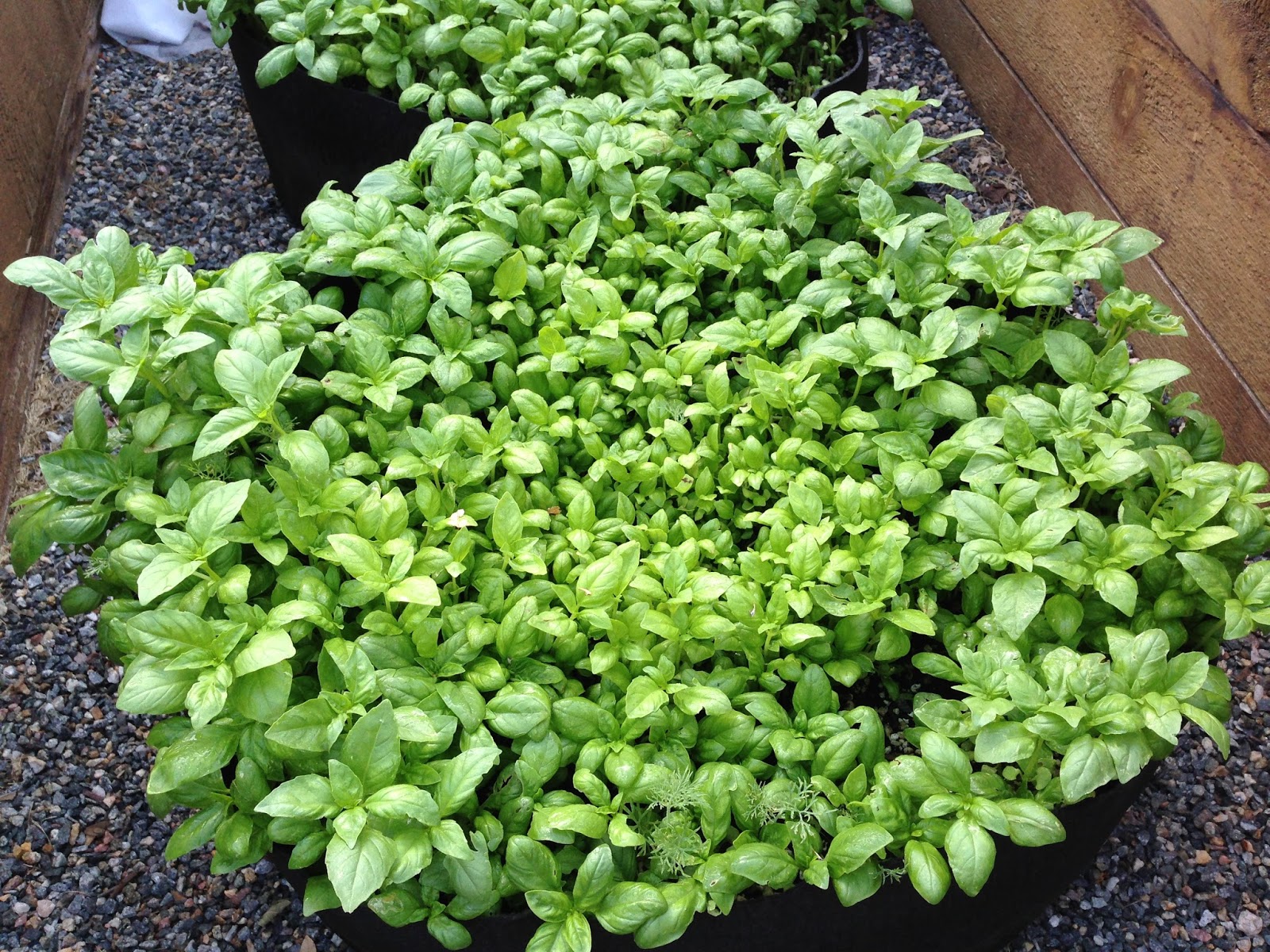
My new technique to grow basil is to heavily over seed a mini raised bed, then harvest as micro basil greens or allow them to grow to two sets of leaves. In a few short weeks there are plenty of greens to use fresh in salads or pesto with plenty left over to process in oil for freezing.

There's still time to seed more basil, and while you're at it, get going on the third or fall season of gardening with your favorite leafy greens.


Saturday, August 6, 2016

Smart Pots Deliver!

Finding quality and tasty homegrown fruits and vegetables this time of the summer is as easy as switching your cell phone to mute. And you'll want silence and no interruptions when savoring fresh green beans off the vine or handfuls of cherry tomatoes when passing by a bountiful plant. Now, right now in early August IS the reason we gardeners, plan, wait, amend, test, plant, fuss, cover and then rejoice!  If you don't grow your own vegetables, no problem.

Every local grocery store, farmer's market, Farmshares/CSA (Community Supported Agriculture) and some street intersections are selling stuff that tastes great. What's on your plate?  How are you plants faring so far this summer?  Here's my report.

I'm in my fifth season of using Smart Pots to grow vegetables. This year I'm using them to grow tomatoes, basil and potatoes. If you don't know about smart pots then you're missing out on one of the easiest, plant and root friendly containers on the market. These porous, award winning, reusable, fabric pots (available in several sizes and three colors) practically ensure garden growing success for any green and non-green thumbed person. As well stated by one of their retailers, smart pots are the cotton shirt of the container world. Plants growing in smart pots don't get as hot - they breathe, allowing air to flow all around the container.  The plant feels comfortable, just like we feel when wearing a cotton shirt.  Roots subsequently grow larger and don't get caught up growing in circles like they do in other hard material containers. Once a root in a smart pot hits the side of the fabric, the root forms new roots that will grow up, down or side-to-side in a process known as root pruning. No circling, just more root growth! 

Seasoned gardeners can try new plants and tuck smart pots anywhere in the landscape. New gardeners or small space gardeners will love that they can be used during the growing season and easily emptied and stored over the winter. To top off their ease of use, over watering is practically impossible with the porous nature of the container. Just use a tray or tarp underneath so soil won't seep out onto concrete or wood surfaces. If used on bare ground, no need to use anything under the smart pot.

Hands down our "Big Boy" tomato growing in the #20 smart pot is well developed, healthy (despite some hail damaged leaves) and full of nice green fruit, just minutes away from turning red.  These tomatoes seem happy, so the person growing them is happy (me).

I direct seed lots of basil each summer and consider it one of nature's best plants, an A+. Unfortunately my in-ground basil plants contracted downy mildew (as diagnosed by the Jefferson County Plant Diagnostic Clinic) a couple of years ago. Downy mildew is not exactly a fungus like powdery mildew, it's more of a nasty pathogen closely related to water molds.  It can be reintroduced to a garden by infected seeds, transplants or spores that happen to blow in. I'm hoping to out smart this pathogen by using smart pots to grow basil plants quickly for day to day use. I'm also harvesting often and freezing or "putting up" small batches of leaves packed in olive oil for use all winter. 

Here's my "out smart downy mildew" procedure:

I heavily direct seeded basil in two small raised bed smart pots. In a matter of days - fourteen or so, I was harvesting basil micro-greens that tasted out of this world delish. And as often happens with basil that is left to grow too long between harvesting, the leaves can taste a bit soapy (at least to me and one of my garden friends, and former caterer). NO soap or bitterness at all in the micro greens, plus by harvesting leaves in the 6-leaf stage, there's less chance for poor taste or succumbing to downy mildew (I hope). One other tip, I covered them with the lightest weight floating row cover when the first Japanese beetles showed up in June. The plants don't mind the cover a bit, it's allows 85% light transmission and the plants just keep growing as usual. In the next few days I'll harvest all the plants and start the process over, well before the chance of frost.


Friday, June 1, 2018

Summer isn't Summer without Basil

My garden life wouldn't be complete without growing basil (Ocimum basilicum) every summer. I suspect you're in the same camp. Today I direct seeded two containers and will seed every few weeks all summer. It's one of the easiest herbs to germinate and grow to your heart's pesto desire.
 
'Red Rubin' Basil and Golden Sage

There are over 160 varieties of basil. Pick your favorites. The purple leaves of ‘Dark Opal’ or ‘Red Rubin’ are a wonderful contrast to the usual green varieties, they taste great and add a pop of color to green salads. 'Purple Ruffles' produce large leaves making them a pretty culinary garnish or a very attractive plant in containers or beds.

Try the large leaf varieties 'Italian Large Leaf' or 'Napoletano' and use in place of lettuce in sandwiches. They are large enough to use as chicken or fish wraps.
 
'Napoletano' Large Leaf Basil
Scented basils add a unique flavor to dishes and can be used to make jams, jellies and vinegars and teas. They include lemon, lime, cinnamon, and licorice basil. 'Sweet Thai' is served in Thai and Vietnamese dishes. Basil leaves are used for seasoning Italian dishes and are the main ingredient of pesto sauce. Use the traditional 'Genovese' variety for authentic pesto flavor.  

Basil prefers well-drained, amended soil. Use new potting soil for containers (see my video below, or click HERE if it doesn't open). Keep the seedbed moist during germination, and watered throughout the growing season, the soil can dry a bit between waterings. Basil prefers full sun with late afternoon shade. For the best flavor avoid over fertilizing basil unless the soil is very depleted of nutrients. 


Pinch off flower spikes as they form. This will maintain basil’s full flavor. Harvest leaves regularly during the growing season. Cut or pinch directly above a set of leaves so the plant becomes more bushy. Start harvesting early, at the four leaf stage - younger leaves taste the best, especially when tossing into salad.  
'Lettuce Leaf' basil in Smart Pots®

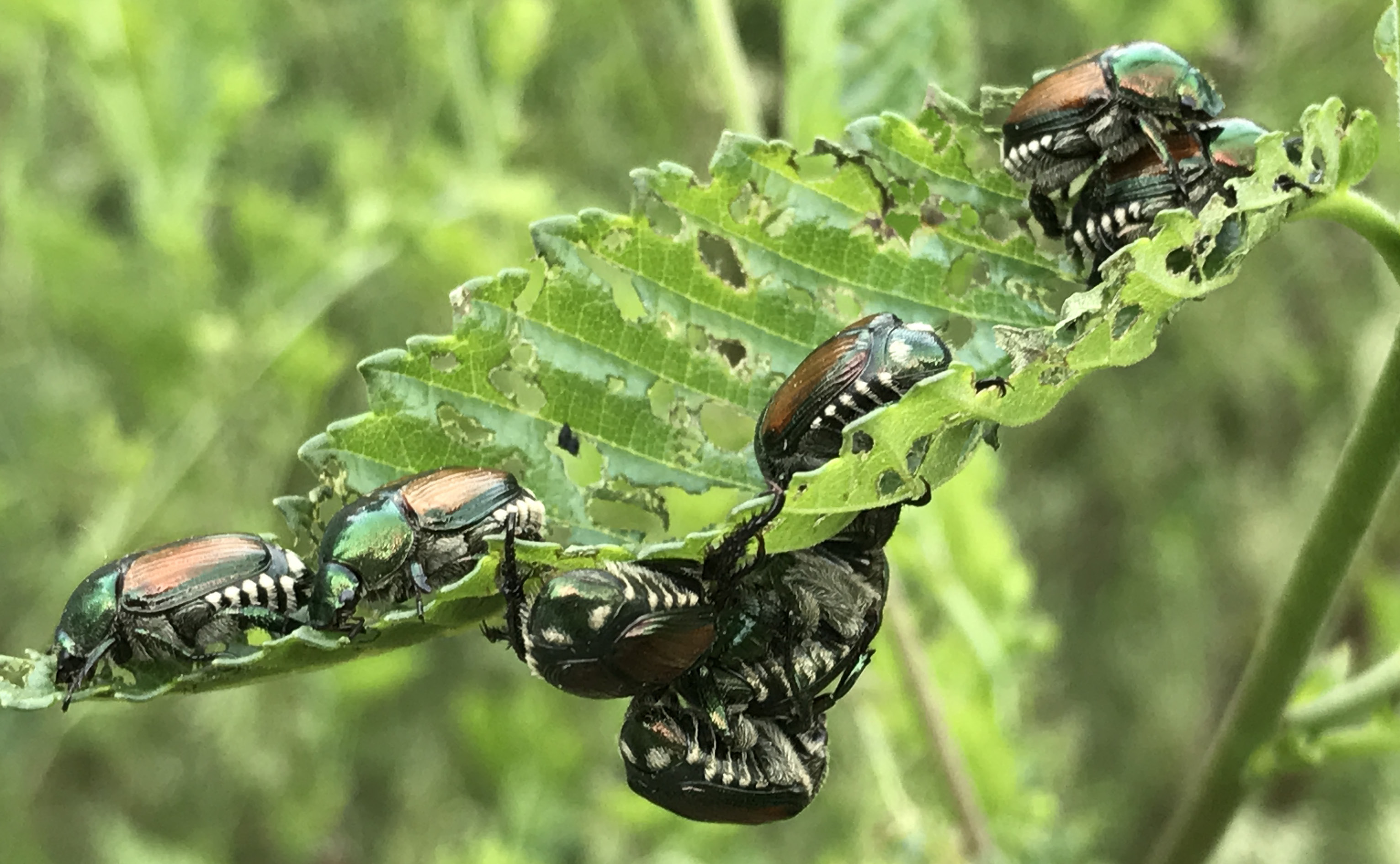
Although not university research-tested, companion planting with basil is said to repel insects such as aphids, mites, tomato hornworms and asparagus beetles. Whether true or not, basil looks great inter-planted throughout the entire garden. Basil is vulnerable to slugs, whitefly, spider mites and Japanese beetles. Fusarium wilt, a fungus can attack plants leaving them yellow, stunted with discolored stems. Rotate where basil is planted each year and look for resistant varieties if you've had disease issues. My plants came down with downy mildew a few summers ago so I'm seeding in Smart Pots®. I cover the plants with inexpensive veil from the fabric store to prevent Japanese beetle damage.

Cut or pinch leaves directly above a set of leaves
Basil leaves can be preserved by freezing or drying. Remove leaves from stems, then rinse, then dry with a salad spinner. Toss leaves (not stems) in a food processor with oil. Chop well, add more oil if needed, the mixture shouldn't be dry but not too oily. Freeze in small containers. For quicker processing, rub olive oil on leaves first then place in ice cube trays or bags. Dry plants by hanging them upside down in a dry area. Crumble leaves and place in an airtight container to use all year. Dried leaves don't taste nearly as good as fresh or frozen, but they are better than store purchased dried.


Internet Photo from theseamanmom.com
To end a stressful day steep one teaspoon of dried basil leaves with a cup of boiling water. Cool and add ice if you prefer chilled. It's goods for the digestive system, but even better for your outlook even if your outlook doesn't need improving!

Wednesday, October 6, 2021

It's Official, Fall 2021

It only took until the final day of September for temperatures to cool, leaves to begin changing colors and a reach for the sweater.  Fall in Denver has arrived ... and oh what a relief it is to be out of the 90s. I love the fall gardening season!

What happenings are up next in the garden?  

For me it's pulling out the tomato and cucumber plants and getting the beds ready for planting garlic.

It's taken me three days (over a period of a couple of weeks) to take out the eight tomato plants. I don't work as fast as I used to and I ran out of room in the compost bin. I harvested a few more almost ripe tomatoes which will still taste grand in a couple of weeks after sitting pretty in a box in the basement. You can also wrap them individually in newspaper to ripen.

As I've written earlier, it was a banner tomato year. Instead of sharing a couple of fruits with neighbors and friends, they took home small boxes. Glen and I blanched and froze a dozen or more of bags of tomatoes for later use. Life in the garden is good.

Hands down my favorite warm season crops this past summer were Tomato Mountain Rouge, Martini Cucumbers and Genovese Basil which I grow every summer without fail.

The Mountain Rouge plants were extremely disease resistant yet didn't disappoint in the taste department. The untraditional blush pink color set it apart from the pack of go - to regular winners like 'Early Girl' and 'Celebrity.'

It's been years since I planted cucumbers, mainly because with just the two of us, they can't be eaten quickly enough. Not so with the martini cukes. No need to peel, just harvest when small, slice and drizzle with olive oil and a little salt and you're set for life. I wish I could grow these inside all winter - they're that good and so care free. The plants didn't get a speck of powdery mildew all summer - dumb me, I didn't take a photo before I pulled them. 

Sure, many of the martini cukes got large if not harvested often enough. This turned out to be a win for a friend with chickens. She told me that her chickens knew they were a very special treat and got super excited when she pulled them from the bag.

The basil is still going, I cover it every night with a folded heavy floating row cover. The next day I remove the cover when it's above fifty degrees.

Edibles that are growing now include some recently seeded mixed lettuces and, as mentioned the basil - all in Smart Pots® for convenience and super healthy growth.

Seed garlic will go in this weekend.  

I hope you had a wonderful summer growing season! 😀🍅🥒🌿🍆🍉🍑🍒🍓🍎

Summer Planted Basil Growing in Smart Pots®

Fall Planted Mixed Lettuce in Smart Pot®


Monday, July 4, 2022

Early Summer Eats from the Garden 2022

Despite planting fewer vegetables this summer to conserve water, we're not going entirely without. 

Let the summer eating begin ... or continue!

Here's a quick run down of our edible garden and some photos - 

  • We've been enjoying a lettuce salad with dinner just about every night for several weeks. I seeded a handful or two of "Flashy Trout Back" babyleaf lettuce in early spring and not only is this selection delicious, but the leaves are a beautiful shade of green with heavy freckles. When plants look this good, they truly taste better. 
  • Yellow and red onion sets were planted the same time as the lettuce. A few were harvested early as green onions. The remaining onions are growing nicely into fuller sized onions which can be harvested just about any time. I like to let them grow well into fall to enjoy over the fall and winter. 
  • Garlic scapes were harvested a few weeks ago and made into pesto and used in recipes or as snacks spread over crackers. 
  • The fall planted garlic is harvested and drying (curing) in the basement.
  • The seeded Smart Pots® of basil are hitting their stride and added to salads and made into pesto. We'll process and freeze batches of chopped leaves with olive oil soon.  
  • The tomato plants (just three) have small fruit, or as my Mom used to say - the first noticeable tomatoes are "setting on."
  • Martini cucumbers were seeded a couple of weeks ago. I intentionally waited to direct seed so they'll hopefully be ready to harvest about the same time the "Early Girl" tomatoes start ripening. The combination of olive oil drizzled cucumbers and tomatoes (with a touch of salt) has become our afternoon fresh vegetable happy hour. 
 
The lasagna dish to the right came out a tad runny, but it just "ran" with outstanding flavor. The main ingredients included spicy Italian sausage, last summer's thawed, previously frozen tomatoes, 3/4 cup of fresh garlic scape pesto and young basil greens on top. The secret ingredient replacing the ricotta cheese was creme fraiche.
 
Summer lasagna isn't very refreshing on hot summer days, so I prepared this dish on one of the rainy, cooler days a few weeks ago. 
 
Newly harvested garlic tastes very mild, it heats up as it cures. One of our favorite meals is garlic infused olive oil* on low heat drizzled over pasta topped with shrimp or chicken. Top with grated parmigiano reggiano cheese, crumbled prosciutto and basil and you'll instantly become the family chef.
 
*Please pay heed and when making garlic infused oil, use it same day or within a few days (stored in the refrigerator at forty degrees). There is a possible risk of botulism with homemade infused oil not stored properly. Read more here


Basil is growing in Smart Pots® covered with bridal tulle to prevent Japanese beetles from eating (yes, they have officially arrived to our yard).

I hope you're also enjoying your homegrown fruits and vegetables. 
 
Happy Summer Dear Reader! 


Wednesday, December 17, 2014

Let the Gift Giving Begin!

Homemade Maple Block Vase
Who doesn't like receiving a gift?  December has to be the official gift giving month of the year and with good reason. Take your pick from the biggies - Christmas and Hanukkah to the food related ones - Fruitcake Day (12/27), National Fritters Day (12/2) and National Maple Syrup Day (12/7). And no doubt you celebrate Pretend to be a Time Traveler Day (12/8) or National Whiners Day (12/26), hope not. Thank you giftypedia.com for listing over fifty holidays to celebrate this month. I promise not to forget Day of the Ninja (12/5) next year.  
Gardeners are the easiest to find gifts for during the month of December. They are happy with just about anything that would be of help or enhancement in the landscape. From a bag of potting soil to a new shovel, they're happy with anything garden related. Below are some photos of some of my favorites (or ones I'm giving this year). If you want to view three minutes of my garden gift giving ideas, just click on the video below.

The first gift above is one of the coolest garden flower vases I've seen. A friend's husband is an expert wood worker and designed the vase to hold just a few flowers in a simple test tube. It's more of an art piece and the fact that flowers can be added is a bonus. I move it around the house because it's so attractive to view. Nothing says welcome like flowers, so place it in a guest room for visiting friends or family. It makes a pretty centerpiece too and you can see across the table to converse with your guests.

The grouping to the right represents some home grown plants including a gift basket. The upper right is a black container of garlic chives using left over from the fall planting cloves. Sink a few small cloves in to a container of potting soil - they take just a couple of weeks to emerge. Snip away to flavor any dish for a special taste of garlic. The leaves quickly grow back, so use them all winter and compost the plants and potting soil in the spring. 

Also pictured are canned tomatoes, dried basil, amaryllis (slow, late start this year, will bloom in January), and paperwhites. Have fun with an assorted basket of garden goodies (choose what you think your gardener would like). In this basket I included seeds, a garden center gift certificate, small pruners, hand soap, gloves and a soil test kit. Instead of a basket consider using a flexible plastic carry-all that doubles as a harvest tub - garden tub.

The gifts to the left require a little bit of spending. The soil test runs $35.00, a magazine subscription varies, some can be as low as $20.00 a year.  Garden books are excellent reference and idea resources, and so helpful with on the spot information (especially if the internet is down). 

A lavender wrap is a nice gesture for the gardener who likes a bit of pampering after a day in the garden (ME). The leaf scoops are for anyone who dislikes fall raking; these will make the job so much easier, almost fun, so much so that your children will want to use them too. Floating row covers are very useful for early outdoor seed starting and covering plants for late spring frosts or season extending in the fall. 

Micro green basil growing in Smart Pots
Any level of gardener or ones with ample garden space to plant will get lots of use out of Smart Pots - my go to container for basil, potatoes, herbs and broccoli. Check out their entire line of reusable, lightweight, watering fool-proof containers. Sold at local garden centers or online.

Enjoy the season!

“We make a living by what we get. We make a life by what we give.”
― Winston Churchill


Sunday, December 11, 2016

Farewell Gardening Season 2016

This year is one for the books, not just for gardening but for world and national events. Since this is a gardening blog I won't attempt to write about the intense election year that just took place. I just hope you agree with me that being out the garden is the place to get away from it all.

Last year my end of the year garden blog dealt with two areas - weather and insects. In 2015 we had too much rain and too many Japanese beetles. In 2016 we had less of the former and more of the latter. Let's visit some of the vegetable tales first, then a few comments about the landscape. I'm Japanese beetled out (for now), but you can read all about them starting here - Japanese beetles.

Without even looking up the exact rain totals for 2016, we were dry most of the summer and all through the fall. The living proof in my garden was the potato crop. In '14 and '15 they were more than content growing in the cool, moist temperatures, the yields were outstanding, the taste beyond any super market spud. This year I had to move them out of the baking hot raised bed garden area to the coolest part of the landscape with afternoon shade. I grew them in Smart Pots so moving them was the easy part, keeping them watered almost every day got tiresome and I could tell by looking at them that they just weren't liking the unrelenting heat. You'd think the tomatoes would be just the opposite and love the hot days, nope, not them either.

Some years tomatoes are more fussy than a three month old during the dinner hour. Instead of crying, a tomato will quickly show you what's bothering it. Temperatures over ninety degrees, especially for several days on end reduce flowers from forming and if they do flower, many of them simply dry up and drop off the vine. Fuss, fuss, and more fuss, I had lots of dropped tomato blossoms last summer. Denver was mostly in the nineties from June 9th into September, so their fuss quotient was over and beyond.
 
Throw in just one night of cool temperatures (less than fifty-five) and tomatoes sulk, often taking several days to resume proper growth, this happened more than once in mid-late August. On the 19th it went down to 51 for a couple of nights, then as low as 49 on August 25th. And no, I didn't pull out the cover cloths for protection (should have). It pretty much stayed in the mid-fifties at night from late August through September with a few warmer nights here and there. As days got shorter in to the fall, the harvest, which should have been robust was just so-so. Now this was my garden in central Denver and I realize there are always exceptions or gardeners who say they had a great tomato season. They are the ones right now enjoying their home canned stewed tomatoes or sauce. Not me, I'm back to store bought 😪.

Tomatoes appreciate fertilizer during their fruiting period, but too much will lead to more foliage growth and less fruiting, too little fertilizer is an invitation for early blight. This year I didn't have early blight, but I did have tomato spotted wilt virus which is very difficult to prevent, plus there's no cure once the plant is infected. Pulling and not composting the diseased plant is the only option.  

A thrip insect carries and spreads the fungal disease when they take up residence in your tomato's leaf tissue. These guys (thrips) can be found on many different weeds in the garden and move to tomatoes or other night shade vegetables. They can also hitch hike home from garden center plants. Read all about their life cycle from this CSU Fact Sheet. The plant symptoms of TSWV look much like other fungal or nutrient problems, including bronzed or spotted leaves, tip die back and a general lack of vigor, the fruits may become mottled or develop ring patterns. I lost four tomato plants to TWSV, I got a firm diagnosis from the Jefferson County Plant Diagnostic Clinic.

Tomato Spotted Wilt Virus
Next year I vow to purchase certified virus-free tomato seeds and grow my own plants or look for garden center varieties that are resistant to TSWV (not easy to find, your best bet is a reputable independent garden center, you may not find labeled virus-free vegetable plants in box stores). I also try to keep the garden area and near the alley fence weed free, but no doubt the weeds up and down the alley off our property may be harboring thrips. 

Basil veil over Smart Pot to keep Japanese beetles off!  It worked!

The basil crop was outstanding this year, no more downy mildew issues at all, the key was growing them in Smart Pots and not directly in the ground. I was able to seed three successive crops and used the leaves in salads, sandwiches and pesto with plenty left to chop, process with oil and freeze. 🙌 

I didn't plant squash this year after the garlic harvest, instead I planted a cover crop to improve the soil tilth and renew the fertility in two of the raised beds.

It was an average year for peppers and eggplant, I think the excessive heat and possible water issues (not enough) may have hurt them, but more than that I noticed that the roots really didn't reach out much in the soil. My hunch is that I just didn't score the compacted roots as well as they should have been cut. I checked out the root ball when I pulled the plants, sort of a visual root autopsy. The plants were small overall, another sign they just weren't growing well. My fault, my bad, thank goodness there's always next year!  

Final Swiss chard and lettuce harvest December 1, 2016
I skipped the early spring cool-season planting of the leafy crops and broccoli, but the August fall crop was a boom with several cut and grow again opportunities. In fact, the lettuce and Swiss chard finally pooped out or honestly, I threw in the trowel just a few weeks ago in early December. 😊

As for the ornamentals and rest of the landscape, despite a couple months of higher than average water use I have no complaints. I attribute the water use on establishing new plantings from the house build (especially the trees). In time that will even out and with the small turf area and water thrifty plantings, I look forward to much lower water bills. In earlier blogs I wrote about the new planting beds, I'll keep you posted on how they fill in over time.
 
Long Lasting Fall Colors and Textures
This past recent fall was visually delightful - the autumn colors were prominent and long lasting. It also seemed like the fruits and seedheads on shrubs, hawthorns, crab apples and many more plants held on for weeks, which only added to the orange, red and purple fall color parade. 


Winter has finally arrived in the Denver area (the mountains are getting tons of the white stuff, so come on out and ski). Snow has been spotty along the Front Range so far - we'll welcome any moisture to replenish our dry soils. Warm days in the 50s seem to sneak in here and there between the Canadian freeze events that have been seeping in to Colorado. Take advantage of the dry days above 40 degrees to water unfrozen new plantings and south facing areas of the landscape. After you drain the hoses, head inside for a warm cup of (your choice) and peruse the 2017 garden catalogs. Dog ear the pages or bookmark the company on your toolbar. Place your orders soon but save some dollars and support your local garden retailer. Better yet, stroll on in and get some seeds or other garden supplies. Breathe in the moist air and dream.....of you know what......spring. 😎

Fall Fruit was AWESOME in 2016

Saturday, July 23, 2022

They're Hungry (as always) - Japanese Beetles Summer 2022

When you venture outside to your 85+ degree garden in mid-afternoon, say
2ish, are you pirouetting to avoid flying Japanese beetle adults like I am?

If your answer is no then either the hungry buggers (keeping it clean) haven't arrived in great numbers to your landscape or you have few plants they want to devour - a rarity since they love scores of perennials, including grass turf, annuals, vegetables, trees and shrubs.

In our garden, they love and I mean absolutely adore, must have, gotta have and seek out the hundred+ feet of Silver Lace Vine planted over the fence next to the alley.   

Very close to where the vines grow and the beetles fly around and on me are the raised beds where I spend time daily doing a variety of chores. Re-filling the bird bath, adjusting the shade cloth over the tomatoes, harvesting basil and watering the summer seeded cover crop are just a few examples. 

Often I'll work for ten or more minutes at a time pulling the prostrate weeds that cleave to the granite rock chip walkways around the raised beds. Weed pulling can be tedious, but dodging flying metallic beetles is 0.00 enjoyment.

I've written extensively about Japanese beetle management of adults and their offspring (egg, larvae, pupae) that grow and reside in our lawns until next summer (next summer's adult batch of beetles). 

Below click on the links to read further or for a quick review about JB management. Plus there are some excellent resources you might like to bookmark.

In the meantime, here are some easy cultural (no or low expense) tips to help until they die out in early fall.

  • Keep grass turf tall, as tall as you can tolerate during the 2-3 months that adult JBs are torturing our plants. Tall lawns grow larger root masses which helps the lawn mostly tolerate JB larva/grub feeding now into fall.  
  • Tall lawns in the heat of summer will also shade out weeds and moisture will remain longer when watered. Think about short, scalped lawns ... you always see more weeds and they dry out super quickly.
  • Deter laid eggs from developing into the next larvae stages by keeping the lawn on the dry side during prime time JB Mama egg laying (most of the summer). Those little eggs need moisture to grow to the larvae stage. Reducing watering can be a bit tricky if you have tree roots growing all through the lawn (I do).  
  • Please avoid keeping tree roots lacking needed moisture by cutting off all water; trees are valuable landscape plants and they are stressed enough most summers in Colorado.  
  • Pick off the adult beetles when they are sluggish in the early morning and late in the evening. It's immediate death when flicked into a soapy water container (I prefer Dawn dish soap). Rinse and feed to your chickens or neighbor who keeps chickens, they should comp you with some eggs for your trouble. 
  • To prevent plants from being chewed cover your special plants and blooms with inexpensive bridal tulle or similar lightweight tight mesh cloths from your locally owned garden center. I've been using tulle for years on the basil plants grown in Smart Pots®. Covering is fairly visible, so just remove it temporarily (if needed) when you're having guests over. 

    Resources:

    Japanese Beetle To Dos and Ponderings 

    My Japanese Beetle Website - tons of helpful information

    A GREAT observational list of plants that Japanese Beetles like least to most for the Colorado and Intermountain region.

    Report YOUR observations of feeding at this survey LINK so the list can be expanded and updated.


Tuesday, January 21, 2020

A Decade of Gardening Part III - a Look Back, Lessons Learned, What's Ahead?

So ... will past landscape decisions be repeated this next decade, including the bad ones?  In two words, "hopefully not." I'm not too proud to talk, write and show photos of my past landscape mistakes, perhaps they'll remind me not to do them again or give you food for thought of what's ahead in your garden. Here goes ...

2010 Let me make this perfectly clear, this is not my dead grafted rose. But it could have happened to me or anyone who isn't in the know that grafted roses (mostly the hybrid types) in our Zone 5 and colder areas need their grafted section, (think of it like a fist) to be buried two to four inches below the soil line. Grafted you say and a fist? 

Dead Hybrid Tea Rose-the graft needs to be buried at planting
This is the area on the rose where the super hardy root stock is grafted or attached to a different upper rose plant (the fist comparison is where the two plants are grafted). The purpose is to grow favorable characteristics in these rose types like repeat bloom, fragrance, various colors and more. Often these roses are used in the florist industry, you know the red bloomers that go out the door by the gazillions around Valentine's Day.

This particular rose was planted in a friend's garden by some landscapers who obviously were not in the know about the graft. In just one year the exposed graft was taken out by the most likely culprit - our cold weather. If, and this isn't always a guarantee, if the graft had been mulched in the fall with soil or a mulch/soil combination then it might have made it through and lived. For much more helpful rose growing and care information, please check out the Denver Rose Society's webpage and click on the Growing Roses tab.

Poor Sprinkler Head Coverage - need Adjusting!
Also in 2010, our south lawn (before our new landscape was planted two years later), I wasn't monitoring the sprinkler heads very well and as you can see, there are dead grass areas. To be honest, I didn't really care that much because we knew it would all be removed soon for the new landscape project. 

If not one hundred percent certain the sprinkler heads were askew, these dead patches might be mistaken for lawn mite damage, which is commonly seen in the spring on south and west lawns that are close to buildings, driveways and sidewalks. Read all about these tiny lawn mites and how to keep them at bay in this fun read from the CSU Horticulture Blog.
Aster Yellows on Coneflower

2013 - when will I ever learn that our landscape location for some odd reason is a magnet for the migratory aster leaf hopper can which transmits a bacterial disorder (aster yellows) to ornamental plants including coneflower, marigold, aster, petunia, zinnia, beet, carrot, lettuce and more. I grow the three vegetables, but have not seen aster yellows occur (fingers crossed).

I grew coneflower (echinacea) in our former landscape with the same result. Once infected, the damage is very obvious with twisted, stunted odd growth and loss of green pigment in veins of leaves. The plants and blooms look so depressed. There's no cure, just digging and tossing the plant (don't compost). No more coneflower plants for us, plus Japanese beetles like coneflower too, so no need to put in another plant for their voracious appetites. 

Just an FYI ...

My favorite posts since 2014 when I started blogging -

Moms are Special May 4, 2016 

My Mom December 7, 2017

Smart Pots Deliver August 6, 2016

Goodbye Gardening Season 2015 December 28, 2015

For the Love of Basil August 11, 2014

In closing ...

2019 I jumped a few years, if I keep writing about my garden missteps, I'll be writing for the next ten years! Let me end this three parter on a good note. The absolutely best landscape move I did in the past ten years was making the decision in 2016 to re-do a small, but very visible planting bed next to the patio. Initially it had been planted with ornamental and culinary herbs surrounding a birch tree. Without any need to justify this very poor decision (hey, at least the birch was on its own drip schedule), I realized the herbs would never be happy with less sun being shaded by the birch as it grew larger and larger. The herbs certainly showed me, they just sat there for four years and sulked. 

Spring into summer of 2016 was hot, often I worked in the cool of the evening. One large lavender clump was kept in place, but the remaining struggling herbs were composted. In went some lovely, low maintenance, pollinator perennials, Plant Select® plants and a small, bareroot zone 4 hardy magnolia (still on its own drip). The result was awesome, at least in our minds. My husband and I couldn't be happier with the way it looks now. My favorite time waste is to watch butterflies, bees and birds do their flitting and feeding just twenty feet from my vantage. Birds are still visiting for the free seeds left on the winter plants.

I wrote about this project back in '16, so feel free to click here and here to see the project from beginning to end. 

The bed is still evolving and I'm experimenting with earlier blooming plants to attract spring migrating hummingbirds and keep all the bees and other beneficial insects happy with nectar and pollen all summer and well into fall. Below are the most recent photos of this work in progress. I still have some open areas for more plants and who knows how it will look ten years from now. Don't worry, I'll keep you posted as we and our plants both grow older together.